


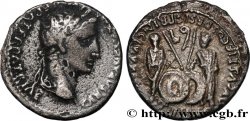
brm_628225 - AUGUSTUS, CAIUS and LUCIUS Denier

недоступный.
Товар уже продан в нашем интернет-магазине (2021)
Цена: : 90.00 €
Товар уже продан в нашем интернет-магазине (2021)
Цена: : 90.00 €
Тип Denier
Дата: 2 AC. - AD. 12
Монетный двор / Город: Lyon
Металл: silver
Проба: 900 ‰
Диаметр: 18 mm
Ориентация осей монеты: 11 h.
Вес: 3,55 g.
Комментарии о состоянии
Monnaie centrée. Joli portrait. Patine grise
Ссылки в каталоге: :
Лицевая сторона
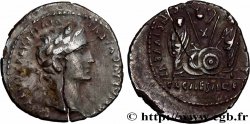
Аверс: легенда: CAESAR AVGVSTVS - [DIVI F PATER] PATRIAE.
Аверс: описание: Tête laurée d'Auguste à droite (O*).
Аверс: перевод: “Cæsar Augustus Divi Filius Pater Patriæ”, (César Auguste fils du divin Jules, père de la patrie).
Обратная сторона
Реверс: легенда: C. L. CAESARES À L'EXERGUE/ AVGVSTI F COS DESIG PRINC IVVENT.
Реверс: Описание: Caius et Lucius Césars debout de face, vêtus de la toge, tenant chacun un bouclier rond et une haste ; entre eux, lituus à gauche, le simpulum à droite.
Реверс: перевод: "Caius et Lucius Cæsares/ Augusti filii consules designati Principes Iuventutis" (Caius et Lucius Césars, fils d'Auguste, consuls désignés, princes de la jeunesse).
Комментарий
Monnaie scindée en deux. Rubans de type 3. C’est l’un des deniers les plus courants de l’atelier de Lyon. C’est aussi l’une des pièces qui se rencontre le plus souvent en Gaule. C’est encore l’un des deniers qui a été le plus imité aussi bien dans les limites de l’Empire qu’en dehors du limes. Le denier représentant les deux petits-fils d’Auguste eut un succès considérable en Gaule. Nous devons modifier notre vision de la circulation monétaire entre la fin de la guerre des Gaules et la mort de Néron en 68 après J.-C. Monnaies gauloises en argent, en bronze et en potin circulèrent conjointement avec les monnaies romaines qui se répandirent largement en dehors de la Narbonnaise. Il faut évoquer le néologisme de circulation “romano-gauloise” plutôt que gallo-romaine.
Coin split in two. Type 3 ribbons. This is one of the most common denarii from the Lyon mint. It is also one of the coins most frequently found in Gaul. It is still one of the denarii that has been most imitated both within the limits of the Empire and outside the limes. The denarius representing the two grandsons of Augustus was very successful in Gaul. We must modify our view of monetary circulation between the end of the Gallic Wars and the death of Nero in 68 AD. Gallic coins in silver, bronze, and potin circulated alongside Roman coins, which spread widely outside Narbonne. We must mention the neologism of circulation “Romano-Gallic” rather than Gallo-Roman
Coin split in two. Type 3 ribbons. This is one of the most common denarii from the Lyon mint. It is also one of the coins most frequently found in Gaul. It is still one of the denarii that has been most imitated both within the limits of the Empire and outside the limes. The denarius representing the two grandsons of Augustus was very successful in Gaul. We must modify our view of monetary circulation between the end of the Gallic Wars and the death of Nero in 68 AD. Gallic coins in silver, bronze, and potin circulated alongside Roman coins, which spread widely outside Narbonne. We must mention the neologism of circulation “Romano-Gallic” rather than Gallo-Roman
Историческая справка
AUGUSTUS, CAIUS and LUCIUS
(2 BC - 4 AD)
Born in 20 and 17 BC, Caius and Lucius are the children of Agrippa (+ 12 BC) and Julie. They are also the grandsons of Augustus who adopted them into the gens Julia. Augustus oversees their education and destines them for the Empire. They receive the titles of "princes of youth" and "caesars" as well as the manly toga. Designated consuls, they must succeed their grandfather. Unfortunately, Lucius died in 2 CE in Marseilles and his brother in 4 CE in Limyra in Lycia. They never rule. Augustus suffers a lot from it. His wife Livia will be accused of having murdered them to offer the succession to Tiberius (according to Suetonius).
 Cообщить об ошибке
 Распечатать страницу
 Отправить мой выбор
 Задать вопрос
 Consign / sell
ПОХОЖИЕ ТОВАРЫ
 Информация


Your Recently Viewed Items
5 Francs Cabasson rouge REUNION 1938 P.14 UNC-
211.00 €

JULIA DOMNA Antoninien AU
300.00 €

ANTONINUS PIUS Denier XF
150.00 €

NERVA Denier XF
280.00 €
JUNIA Denier AU
250.00 €

SEVERUS ALEXANDER Denier MS/AU
200.00 €
cgbfr.com для нумизматов


