


v30_1007 - Essai de frappe de la 5 francs Semeuse de 1898 au type de la 5 francs Hercule, tranche striée 1873 Paris F.334/9 var.

MONNAIES 30 (2007)
Начальная цена : 1 200.00 €
Назначить цену : 4 000.00 €
Цена реализации : 2 102.00 €
Количество ставок : 3
Максимальная предлагаемая цена : 2 495.00 €
Начальная цена : 1 200.00 €
Назначить цену : 4 000.00 €
Цена реализации : 2 102.00 €
Количество ставок : 3
Максимальная предлагаемая цена : 2 495.00 €
Тип Essai de frappe de la 5 francs Semeuse de 1898 au type de la 5 francs Hercule, tranche striée
Дата: (1898)
Дата: 1873
Монетный двор / Город: Paris
Металл: silver
Проба: 835 ‰
Диаметр: 37,52 mm
Ориентация осей монеты: 6 h.
Вес: 25,05 g.
Век: striée fine
Редкость: R3
Комментарии о состоянии
Exemplaire parfait mais minuscules irrégularités de surface provenant certainement d’un polissage insuffisant du coin. Très légère patine bleue et rose
Ссылки в каталоге: :
Лицевая сторона
Аверс: легенда: (RAMEAU) LIBERTÉ ÉGALITÉ FRATERNITÉ.
Аверс: описание: Hercule barbu demi-nu, debout de face avec la léonté, sur son épaule gauche une patte du lion, sur son bras et autour de sa taille la peau du lion de Némée, derrière ses jambes queue et pattes du lion, unissant la Liberté debout à gauche tournée à droite tenant une pique surmontée d'une main de Justice, vêtue d'un peplos et l'Égalité debout à droite tournée à gauche, tenant le niveau, vêtue d'un chiton : à l'exergue, Dupré en cursif entre deux étoiles.
Обратная сторона
Реверс: легенда: RÉPUBLIQUE FRANÇAISE*.
Реверс: Описание: 5 / FRANCS, en deux lignes au-dessus de 1873, le tout contenu dans une couronne composée à gauche d'une branche de laurier, à droite d'une branche de chêne, nouées à leur base par un ruban ; au-dessous du nœud la lettre d'atelier A encadrée des différents.
Комментарий
Cet exemplaire se distingue d’une frappe normale par l’absence de lettre d’atelier et de différent du directeur de l’atelier en 1873, Alfred Renouard de Bussière, et par la faiblesse du dernier chiffre du millésime.
On pourrait le rapprocher des essais décrits par Mazard n° 2612 ou 2613 et datés par lui des années 1920/1930 mais nous pensons que les essais décrits par Mazard n’ont aucun rapport avec les nôtres pour, au moins, trois raisons.
Tout d’abord les exemplaires Mazard sont en nickel, les nôtres en argent ; les tranches des Mazard sont lisses, les nôtres, non, qu’il s’agisse de la vieille invocation DIEU PROTÈGE LA FRANCE ou d’une tranche striée.
Cette formule est la troisième raison qui exclut une datation postérieure à 1905, date à laquelle cette légende de tranche devient anathème par la séparation de l’Eglise et de l’État et est remplacée par LIBERTÉ ÉGALITÉ FRATERNITÉ.
Entre l’arrêt des frappes en 1878 et 1905, un seul moment semble possible pour placer ces essais de frappes : 1898 et la frappe en 75 exemplaires de la 5 francs Semeuse, dont la tranche est encore à la vieille formule chrétienne.
Réglons tout de suite une vieille erreur du Gadoury 1989 consacré aux essais, il n’existe pas de 5 francs Semeuse 1898 avec la tranche LIBERTE EGALITE FRATERNITE. Personne n’a jamais vu d’exemplaire, nous ignorons où Gadoury a été trouver cette information et la séparation de l’Église et de l’État datant de 1905 avec application aux monnaies en 1907, cette tranche est impossible en 1898.
Aucun rapport donc entre ces essais et ceux de nickel dédaigneusement classés R2 par Mazard ; cet essai de frappe avec la tranche inscrite est complètement inédit à notre connaissance, si l’exemplaire avec la tranche striée est déjà connu par un autre exemplaire.
En effet, dans la vente Vinchon du 20 février 1980, lot 402, se trouve proposé, référencé comme “pré-série de la 10 francs 1964” un exemplaire à tranche striée qui correspond rigoureusement au nôtre, avec les mêmes caractéristiques du coin (Jean Vinchon note aussi la faiblesse du 3 final du millésime). Jean Vinchon avait-il des informations directes dont il ne fait pas mention dans son catalogue ? A-t-il fondé son attribution sur une conviction intime et non sur des informations ?
Il nous faut reconnaître que ce qui nous fait dater ces pré-séries de 1898 et non de 1964 est la découverte de l’exemplaire jumeau avec tranche inscrite. Faute de celui-ci, l’attribution à 1964 aurait semblé plus logique.
Renseignements pris à la Monnaie de Paris, les viroles ne sont pas conservées, contrairement aux coins : il semble donc impensable que la virole DIEU PROTEGE LA FRANCE ait été disponible en 1964. On pourrait évidemment supposer que les viroles auraient été détruites depuis, ce qui semble peu probable.
En revanche, un détail qui a son poids en faveur de l’attribution de ces pré-séries à la préparation de la 10 francs 1964 est la pré-série “officielle” de celle-ci, bien connue et publiée. Nous avons d’ailleurs remarqué et mis en note dans le FRANC que cette pré-série était au type Dupré modifié IIe et IIIe républiques, donc avec la main de Justice en haut de la pique et non pas le bonnet phrygien du type Dupré original des Union et Force. Le texte de Loi qui crée le type 10 francs de 1964 fait expressément référence au modèle Dupré 1795 mais la pré-série utilise des coins du type modifié.
Le fait que nos “pré-pré-séries” soient également au type modifié peut aussi bien s’expliquer pour 1898 (dernier coin de 5 francs utilisé) que pour 1964 : le décret qui précise que le type Dupré à utiliser est l’original date du 9 janvier 1965, donc après la frappe des pré-séries et même de l’essai. L’information sur le type à utiliser (non dénué de signification politique) n’avait certainement pas encore été transmise lors de la fabrication des pré-séries.
La tranche DIEU PROTEGE LA FRANCE donne encore deux indices contradictoires car, entre 1898 et 1964, il semble qu’aucune pièce ne fut frappée en 37 mm sauf les fameux essais cités par Mazard. Or ceux-ci sont en tranche lisse : on peut donc penser que la virole de 37 mm, obligatoirement en DIEU PROTEGE LA FRANCE, utilisée pour la dernière fois en 1898, n’existait plus en 1920/1930 donc a fortiori qu’elle n’existait pas non plus en 1964, donc que nos essais de frappe étaient bien destinés à la 5 francs Semeuse de Roty.
Mais, a contrario, on peut penser que Patey a volontairement frappé les essais de 37 mm répertoriés par Mazard en tranche lisse. On peut aussi penser la Monnaie conservait, non pas toutes les viroles, mais au moins une virole par diamètre et donc une virole de 37 mm. Celle-ci ne pouvait être qu’en DIEU PROTEGE LA FRANCE, puisqu’il n’y a pas eu lieu depuis 1898 d’en fabriquer une pour un diamètre de 37 mm.
Dernière déduction, que Raymond Joly, ignorant encore en 1964 si la pièce de 37 mm dont on lui demandait la mise au point aurait une tranche striée ou une tranche inscrite, fit les essais des deux et prit donc la seule virole de 37 mm disponible, celle déjà utilisée en 1898.
En conclusion, il nous semble logique que cette pré-série corresponde à la 5 francs Semeuse 1898 mais l’hypothèse d’une pré-série de 1964 n’est pas du tout à exclure car de nombreux arguments penchent sinon en sa faveur tout au moins en sa plausibilité.
Espérons que des recherches en archives pourront un jour donner une datation certaine à ces essais de frappe exceptionnels.
This example is distinguished from a normal strike by the absence of a workshop letter and a different from the workshop director in 1873, Alfred Renouard de Bussière, and by the weakness of the last digit of the year..
It could be compared to the tests described by Mazard no. 2612 or 2613 and dated by him to the 1920s/1930s, but we believe that the tests described by Mazard have no connection with ours for at least three reasons..
First of all, the Mazard examples are nickel, ours are silver; the edges of the Mazard are smooth, ours are not, whether it is the old invocation GOD PROTECT FRANCE or a ridged edge.
This formula is the third reason which excludes a dating after 1905, date at which this edge legend became anathema by the separation of Church and State and was replaced by LIBERTY EQUALITY FRATERNITY.
Between the end of the strikes in 1878 and 1905, only one moment seems possible to place these test strikes: 1898 and the striking of 75 examples of the 5 francs Semeuse, the edge of which is still in the old Christian formula..
Let's immediately correct an old error from the 1989 Gadoury dedicated to essays: there is no 5 franc Semeuse 1898 with the edge LIBERTE EGALITE FRATERNITE. No one has ever seen a example, we do not know where Gadoury found this information and the separation of Church and State dating from 1905 with application to coins in 1907, this slice is impossible in 1898.
There is therefore no connection between these tests and those of nickel disdainfully classified as R2 by Mazard; this test strike with the inscribed edge is completely unpublished to our knowledge, if the example with the striated edge is already known from another example.
In fact, in the Vinchon sale of February 20, 1980, lot 402, is offered, referenced as “pre-series of the 10 francs 1964” a example with a striated edge which corresponds rigorously to ours, with the same characteristics of the die (Jean Vinchon also notes the weakness of the final 3 of the vintage). Did Jean Vinchon have direct information that he does not mention in his catalogue? Did he base his attribution on a personal conviction and not on information? We must recognize that what makes us date these pre-series from 1898 and not from 1964 is the discovery of the twin example with an inscribed edge. In the absence of this, the attribution to 1964 would have seemed more logical..
According to information obtained from the Paris Mint, the ferrules are not preserved, unlike the dies: it therefore seems unthinkable that the DIEU PROTEGE LA FRANCE ferrule was available in 1964.. One could obviously assume that the ferrules would have been destroyed since then, which seems unlikely..
On the other hand, a detail that has its weight in favor of the attribution of these pre-series to the preparation of the 10 francs 1964 is the “official” pre-series of the latter, well known and published. We have also noticed and noted in the FRANC that this pre-series was in the modified Dupré type of the 2nd and 3rd Republics, therefore with the hand of Justice at the top of the pike and not the Phrygian cap of the original Dupré type of the Union and Force. The text of the Law which created the 10 franc type of 1964 makes express reference to the Dupré 1795 model but the pre-series uses dies of the modified type.
The fact that our “pre-pre-series” are also of the modified type can be explained as well for 1898 (last 5 franc coin used) as for 1964: the decree which specifies that the Dupré type to be used is the original dates from January 9, 1965, therefore after the minting of the pre-series and even the test. Information on the type to be used (not without political significance) had certainly not yet been transmitted during the production of the pre-series.
The DIEU PROTEGE LA FRANCE edge still gives two contradictory clues because, between 1898 and 1964, it seems that no coin was struck in 37 mm except the famous tests cited by Mazard. But these are smooth edged: we can therefore think that the 37 mm collar, obligatorily in DIEU PROTEGE LA FRANCE, used for the last time in 1898, no longer existed in 1920/1930, therefore a fortiori it did not exist either in 1964, therefore our test strikes were indeed intended for the 5 francs Semeuse de Roty.
But, on the contrary, we can think that Patey deliberately struck the 37 mm tests listed by Mazard in a smooth slice.. We can also think that the Mint kept, not all the ferrules, but at least one ferrule per diameter and therefore a ferrule of 37 mm. This could only be in GOD PROTECT FRANCE, since there has been no need since 1898 to manufacture one with a diameter of 37 mm..
Last deduction, that Raymond Joly, still unaware in 1964 whether the 37 mm piece he was asked to develop would have a striated edge or an inscribed edge, carried out tests on both and therefore took the only 37 mm ferrule available, the one already used in 1898.
In conclusion, it seems logical to us that this pre-series corresponds to the 5 francs Semeuse 1898 but the hypothesis of a pre-series of 1964 is not at all to be excluded because many arguments lean if not in its favor at least in its plausibility.
Let us hope that archival research will one day be able to provide a definitive dating for these exceptional typing tests.
On pourrait le rapprocher des essais décrits par Mazard n° 2612 ou 2613 et datés par lui des années 1920/1930 mais nous pensons que les essais décrits par Mazard n’ont aucun rapport avec les nôtres pour, au moins, trois raisons.
Tout d’abord les exemplaires Mazard sont en nickel, les nôtres en argent ; les tranches des Mazard sont lisses, les nôtres, non, qu’il s’agisse de la vieille invocation DIEU PROTÈGE LA FRANCE ou d’une tranche striée.
Cette formule est la troisième raison qui exclut une datation postérieure à 1905, date à laquelle cette légende de tranche devient anathème par la séparation de l’Eglise et de l’État et est remplacée par LIBERTÉ ÉGALITÉ FRATERNITÉ.
Entre l’arrêt des frappes en 1878 et 1905, un seul moment semble possible pour placer ces essais de frappes : 1898 et la frappe en 75 exemplaires de la 5 francs Semeuse, dont la tranche est encore à la vieille formule chrétienne.
Réglons tout de suite une vieille erreur du Gadoury 1989 consacré aux essais, il n’existe pas de 5 francs Semeuse 1898 avec la tranche LIBERTE EGALITE FRATERNITE. Personne n’a jamais vu d’exemplaire, nous ignorons où Gadoury a été trouver cette information et la séparation de l’Église et de l’État datant de 1905 avec application aux monnaies en 1907, cette tranche est impossible en 1898.
Aucun rapport donc entre ces essais et ceux de nickel dédaigneusement classés R2 par Mazard ; cet essai de frappe avec la tranche inscrite est complètement inédit à notre connaissance, si l’exemplaire avec la tranche striée est déjà connu par un autre exemplaire.
En effet, dans la vente Vinchon du 20 février 1980, lot 402, se trouve proposé, référencé comme “pré-série de la 10 francs 1964” un exemplaire à tranche striée qui correspond rigoureusement au nôtre, avec les mêmes caractéristiques du coin (Jean Vinchon note aussi la faiblesse du 3 final du millésime). Jean Vinchon avait-il des informations directes dont il ne fait pas mention dans son catalogue ? A-t-il fondé son attribution sur une conviction intime et non sur des informations ?
Il nous faut reconnaître que ce qui nous fait dater ces pré-séries de 1898 et non de 1964 est la découverte de l’exemplaire jumeau avec tranche inscrite. Faute de celui-ci, l’attribution à 1964 aurait semblé plus logique.
Renseignements pris à la Monnaie de Paris, les viroles ne sont pas conservées, contrairement aux coins : il semble donc impensable que la virole DIEU PROTEGE LA FRANCE ait été disponible en 1964. On pourrait évidemment supposer que les viroles auraient été détruites depuis, ce qui semble peu probable.
En revanche, un détail qui a son poids en faveur de l’attribution de ces pré-séries à la préparation de la 10 francs 1964 est la pré-série “officielle” de celle-ci, bien connue et publiée. Nous avons d’ailleurs remarqué et mis en note dans le FRANC que cette pré-série était au type Dupré modifié IIe et IIIe républiques, donc avec la main de Justice en haut de la pique et non pas le bonnet phrygien du type Dupré original des Union et Force. Le texte de Loi qui crée le type 10 francs de 1964 fait expressément référence au modèle Dupré 1795 mais la pré-série utilise des coins du type modifié.
Le fait que nos “pré-pré-séries” soient également au type modifié peut aussi bien s’expliquer pour 1898 (dernier coin de 5 francs utilisé) que pour 1964 : le décret qui précise que le type Dupré à utiliser est l’original date du 9 janvier 1965, donc après la frappe des pré-séries et même de l’essai. L’information sur le type à utiliser (non dénué de signification politique) n’avait certainement pas encore été transmise lors de la fabrication des pré-séries.
La tranche DIEU PROTEGE LA FRANCE donne encore deux indices contradictoires car, entre 1898 et 1964, il semble qu’aucune pièce ne fut frappée en 37 mm sauf les fameux essais cités par Mazard. Or ceux-ci sont en tranche lisse : on peut donc penser que la virole de 37 mm, obligatoirement en DIEU PROTEGE LA FRANCE, utilisée pour la dernière fois en 1898, n’existait plus en 1920/1930 donc a fortiori qu’elle n’existait pas non plus en 1964, donc que nos essais de frappe étaient bien destinés à la 5 francs Semeuse de Roty.
Mais, a contrario, on peut penser que Patey a volontairement frappé les essais de 37 mm répertoriés par Mazard en tranche lisse. On peut aussi penser la Monnaie conservait, non pas toutes les viroles, mais au moins une virole par diamètre et donc une virole de 37 mm. Celle-ci ne pouvait être qu’en DIEU PROTEGE LA FRANCE, puisqu’il n’y a pas eu lieu depuis 1898 d’en fabriquer une pour un diamètre de 37 mm.
Dernière déduction, que Raymond Joly, ignorant encore en 1964 si la pièce de 37 mm dont on lui demandait la mise au point aurait une tranche striée ou une tranche inscrite, fit les essais des deux et prit donc la seule virole de 37 mm disponible, celle déjà utilisée en 1898.
En conclusion, il nous semble logique que cette pré-série corresponde à la 5 francs Semeuse 1898 mais l’hypothèse d’une pré-série de 1964 n’est pas du tout à exclure car de nombreux arguments penchent sinon en sa faveur tout au moins en sa plausibilité.
Espérons que des recherches en archives pourront un jour donner une datation certaine à ces essais de frappe exceptionnels.
This example is distinguished from a normal strike by the absence of a workshop letter and a different from the workshop director in 1873, Alfred Renouard de Bussière, and by the weakness of the last digit of the year..
It could be compared to the tests described by Mazard no. 2612 or 2613 and dated by him to the 1920s/1930s, but we believe that the tests described by Mazard have no connection with ours for at least three reasons..
First of all, the Mazard examples are nickel, ours are silver; the edges of the Mazard are smooth, ours are not, whether it is the old invocation GOD PROTECT FRANCE or a ridged edge.
This formula is the third reason which excludes a dating after 1905, date at which this edge legend became anathema by the separation of Church and State and was replaced by LIBERTY EQUALITY FRATERNITY.
Between the end of the strikes in 1878 and 1905, only one moment seems possible to place these test strikes: 1898 and the striking of 75 examples of the 5 francs Semeuse, the edge of which is still in the old Christian formula..
Let's immediately correct an old error from the 1989 Gadoury dedicated to essays: there is no 5 franc Semeuse 1898 with the edge LIBERTE EGALITE FRATERNITE. No one has ever seen a example, we do not know where Gadoury found this information and the separation of Church and State dating from 1905 with application to coins in 1907, this slice is impossible in 1898.
There is therefore no connection between these tests and those of nickel disdainfully classified as R2 by Mazard; this test strike with the inscribed edge is completely unpublished to our knowledge, if the example with the striated edge is already known from another example.
In fact, in the Vinchon sale of February 20, 1980, lot 402, is offered, referenced as “pre-series of the 10 francs 1964” a example with a striated edge which corresponds rigorously to ours, with the same characteristics of the die (Jean Vinchon also notes the weakness of the final 3 of the vintage). Did Jean Vinchon have direct information that he does not mention in his catalogue? Did he base his attribution on a personal conviction and not on information? We must recognize that what makes us date these pre-series from 1898 and not from 1964 is the discovery of the twin example with an inscribed edge. In the absence of this, the attribution to 1964 would have seemed more logical..
According to information obtained from the Paris Mint, the ferrules are not preserved, unlike the dies: it therefore seems unthinkable that the DIEU PROTEGE LA FRANCE ferrule was available in 1964.. One could obviously assume that the ferrules would have been destroyed since then, which seems unlikely..
On the other hand, a detail that has its weight in favor of the attribution of these pre-series to the preparation of the 10 francs 1964 is the “official” pre-series of the latter, well known and published. We have also noticed and noted in the FRANC that this pre-series was in the modified Dupré type of the 2nd and 3rd Republics, therefore with the hand of Justice at the top of the pike and not the Phrygian cap of the original Dupré type of the Union and Force. The text of the Law which created the 10 franc type of 1964 makes express reference to the Dupré 1795 model but the pre-series uses dies of the modified type.
The fact that our “pre-pre-series” are also of the modified type can be explained as well for 1898 (last 5 franc coin used) as for 1964: the decree which specifies that the Dupré type to be used is the original dates from January 9, 1965, therefore after the minting of the pre-series and even the test. Information on the type to be used (not without political significance) had certainly not yet been transmitted during the production of the pre-series.
The DIEU PROTEGE LA FRANCE edge still gives two contradictory clues because, between 1898 and 1964, it seems that no coin was struck in 37 mm except the famous tests cited by Mazard. But these are smooth edged: we can therefore think that the 37 mm collar, obligatorily in DIEU PROTEGE LA FRANCE, used for the last time in 1898, no longer existed in 1920/1930, therefore a fortiori it did not exist either in 1964, therefore our test strikes were indeed intended for the 5 francs Semeuse de Roty.
But, on the contrary, we can think that Patey deliberately struck the 37 mm tests listed by Mazard in a smooth slice.. We can also think that the Mint kept, not all the ferrules, but at least one ferrule per diameter and therefore a ferrule of 37 mm. This could only be in GOD PROTECT FRANCE, since there has been no need since 1898 to manufacture one with a diameter of 37 mm..
Last deduction, that Raymond Joly, still unaware in 1964 whether the 37 mm piece he was asked to develop would have a striated edge or an inscribed edge, carried out tests on both and therefore took the only 37 mm ferrule available, the one already used in 1898.
In conclusion, it seems logical to us that this pre-series corresponds to the 5 francs Semeuse 1898 but the hypothesis of a pre-series of 1964 is not at all to be excluded because many arguments lean if not in its favor at least in its plausibility.
Let us hope that archival research will one day be able to provide a definitive dating for these exceptional typing tests.
Историческая справка
III REPUBLIC
(4/09/1870-10/07/1940)
The news of the capitulation of Sedan provokes the revolution of September 4, 1870 in Paris. Proclaimed at the Hôtel de Ville, the Republic is endowed with a provisional government called the Government of National Defense. Threatened on the left by the insurrection of the Commune and on the right by the monarchists, the new regime had a difficult start.. Initially head of the executive power (February 1871), Thiers was responsible for reorganizing the country before choosing its form of government.. He became President of the Republic in August 1871 and, despite his action to liberate the territory, had to leave his post in March 1873 in the face of royalist opposition.. He is then replaced by Mac-Mahon favorable to the restoration of the monarchy but this one is not restored following the question of the flag. The law of the septennat was then put in place in November 1873 and then, in 1875, the fundamental laws were passed which served as the Constitution of the Third Republic.. Parliamentary system, it is characterized in particular by the clear preponderance of the legislative power on the executive power. Anticlerical, the Third Republic makes school free, secular and compulsory but continues the colonial policy for its economic, strategic and moral ambitions. Separation of Church and State was passed in 1905.. The idea of revenge on Germany and significant nationalism are at the heart of the Boulangist crisis, the Panama scandal or the Dreyfus affair of the years 1886-1899, while foreign policy is very active, particularly in Morocco and that the arms race develops. The First World War was expensive for France, which only recovered from 1920 or even 1928 for the coin with the "Poincaré" franc.. The crisis of 1929 is felt only from 1932 but lasts until 1939, a period during which ministerial instability is very important. Wavering in 1934, the Third Republic found a new unitary cement with anti-fascism which enabled the Popular Front to come to power in 1936.. But, paralyzed against Germany, France was then bogged down in a "phony war" and then suffered one of the greatest defeats in its history in June 1940.. Gathered in the National Assembly in Vichy on July 10, 1940, the Chambers, although elected in 1936, voted full powers to Pétain in a sort of collective suicide by 569 votes for, 80 votes against and 18 abstentions..
 Cообщить об ошибке
 Распечатать страницу
 Отправить мой выбор
 Задать вопрос
 Consign / sell
ПОХОЖИЕ ТОВАРЫ

 Информация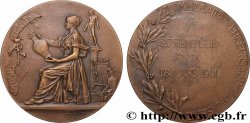


cgbfr.com для нумизматов


