


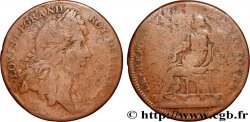
fjt_962345 - LOUIS XIV LE GRAND ou LE ROI SOLEIL Jacques François Édouard Stuart, prétendant aux trônes d’Angleterre et d’Écosse 1710

недоступный.
Товар уже продан в нашем интернет-магазине (2025)
Цена: : 80.00 €
Товар уже продан в нашем интернет-магазине (2025)
Цена: : 80.00 €
Тип Jacques François Édouard Stuart, prétendant aux trônes d’Angleterre et d’Écosse
Дата: 1710
Металл: red copper
Диаметр: 29,5 mm
Ориентация осей монеты: 7 h.
Вес: 7,55 g.
Век: brute
Редкость: R2
Ссылки в каталоге: :
Лицевая сторона
Аверс: легенда: DOMINUM COGNOSCITE VESTRUM.
Аверс: описание: Tête laurée de Jacques Stuart.
Аверс: перевод: Connaissez votre Seigneur.
Обратная сторона
Реверс: легенда: COGNOSCUNT ME MEAE ; À L'EXERGUE : 1710.
Реверс: Описание: Cinq moutons au bas d'une colline.
Реверс: перевод: Les miens me connaissent.
Комментарий
Jacques François Édouard Stuart dit le chevalier de Saint-George (20 juin 1688, palais Saint-Jacques[1] de Londres – 1er janvier 1766, palais Balestra, Rome), fut prince de Galles de 1688 à 1689. Il est le fils du roi Jacques II d'Angleterre et d'Irlande et VII d'Écosse (1633-1701) et de sa 2e épouse, la princesse Marie de Modène (1658-1718).
Impressionnante biographie avec portrait à http://fr.wikipedia.org/wiki/Jacques_Fran%C3%A7ois_Stuart
dont nous reprenons les grands traits :
Héritier à la mort de son père des droits des Stuarts aux trônes d'Angleterre, d'Écosse et d'Irlande, il fut proclamé roi "Jacques III d'Angleterre et d'Irlande et VIII d'Écosse" le 16 septembre 1701 au château de Saint-Germain-en-Laye où il vit avec sa cour composée principalement d'Ecossais et d'Anglais qui le reconnaissent comme leur souverain. À l'échelle européenne seuls la France, l'Espagne, Modène, ainsi que le Saint-Siège le reconnaissent pour roi d'Angleterre, d'Écosse et d'Irlande.
Soutenu par Louis XIV, il participe à la campagne de Flandres en 1708-1709 (bataille de Malplaquet en 1709) aux côtés des petits-fils du roi. La France tente d'organiser son débarquement en Écosse pour soulever le pays mais une tentative en 1708 ne lui permet même pas de débarquer. Le traité d'Utrecht en 1713 contraint le roi de France à lui refuser l'asile.
En février 1713, Jacques Stuart s'installe donc à Bar-le-Duc capitale du Barrois où il mène la belle vie, fréquentant le duc de Lorraine Léopold Ier, neveu par alliance de Louis XIV, et ses parents aux château de Lunéville et à Commercy. En 1715, entendant profiter du mécontentement suscité par l'avènement de George Ier de Hanovre sur les trônes britanniques et irlandais, les jacobites tentent de fomenter un nouveau soulèvement avec le soutien de Henry Bolingbroke qui a perdu tout crédit après la mort de la reine Anne. Cette nouvelle tentative, connue sous le nom de The Fifteen dans l'histoire britannique, est financée par l'Espagne et bénéficie de complicités françaises à défaut d'une aide officielle mais lorsque "Jacques VIII et III" (comme il est connu par ses adhérents en Écosse) débarque en Écosse au nord d'Aberdeen le 22 décembre 1715 (anc. style), c'est pour découvrir que l'armée levée par le comte de Mar s'est en grande partie dispersée à la suite de la bataille incertaine de Sheriffmuir le 10 novembre. Malade, peu sûr de lui, "Jacques VIII et III" doit fuir à nouveau devant l'arrivée d'une armée britannique commandée par Argyll alors qu'il préparait son couronnement de roi d'Écosse : il rembarque pour la France le 4 février 1715.
James Francis Edward Stuart, known as the Knight of St. George (20 June 1688, St. James's Palace[1] in London – 1 January 1766, Balestra Palace, Rome), was Prince of Wales from 1688 to 1689. He was the son of King James II of England and Ireland and VII of Scotland (1633-1701) and his second wife, Princess Mary of Modena (1658-1718)..
Impressive biography with portrait at http://fr. Wikipedia. org/wiki/Jacques_Fran%C3%A7ois_Stuart whose main features we take: Heir on the death of his father to the Stuart rights to the thrones of England, Scotland and Ireland, he was proclaimed king \\\"James III of England and Ireland and VIII of Scotland\\\" on September 16, 1701 at the Château de Saint-Germain-en-Laye where he lived with his court composed mainly of Scots and English who recognized him as their sovereign. On a European scale, only France, Spain, Modena, and the Holy See recognize him as King of England, Scotland, and Ireland..
Supported by Louis XIV, he took part in the Flanders campaign in 1708-1709 (Battle of Malplaquet in 1709) alongside the king's grandsons.. France tried to organize its landing in Scotland to raise the country but an attempt in 1708 did not even allow it to land. The Treaty of Utrecht in 1713 forced the King of France to refuse him asylum..
In February 1713, Jacques Stuart moved to Bar-le-Duc, the capital of Barrois, where he led the good life, spending time with the Duke of Lorraine, Leopold I, nephew by marriage of Louis XIV, and his parents at the Château de Lunéville and at Commercy.. In 1715, intending to take advantage of the discontent caused by the accession of George I of Hanover to the British and Irish thrones, the Jacobites attempted to foment a new uprising with the support of Henry Bolingbroke, who had lost all credibility after the death of Queen Anne.. This new attempt, known as The Fifteen in British history, was financed by Spain and benefited from French complicity in the absence of official aid, but when \\\"James VIII and III\\\" (as he was known to his adherents in Scotland) landed in Scotland north of Aberdeen on 22 December 1715 (formerly. style), it is to discover that the army raised by the Earl of Mar has largely dispersed following the uncertain Battle of Sheriffmuir on 10 November. Ill and unsure of himself, \\\"James VIII and III\\\" had to flee again before the arrival of a British army commanded by Argyll while he was preparing for his coronation as King of Scotland: he re-embarked for France on February 4, 1715.
Impressionnante biographie avec portrait à http://fr.wikipedia.org/wiki/Jacques_Fran%C3%A7ois_Stuart
dont nous reprenons les grands traits :
Héritier à la mort de son père des droits des Stuarts aux trônes d'Angleterre, d'Écosse et d'Irlande, il fut proclamé roi "Jacques III d'Angleterre et d'Irlande et VIII d'Écosse" le 16 septembre 1701 au château de Saint-Germain-en-Laye où il vit avec sa cour composée principalement d'Ecossais et d'Anglais qui le reconnaissent comme leur souverain. À l'échelle européenne seuls la France, l'Espagne, Modène, ainsi que le Saint-Siège le reconnaissent pour roi d'Angleterre, d'Écosse et d'Irlande.
Soutenu par Louis XIV, il participe à la campagne de Flandres en 1708-1709 (bataille de Malplaquet en 1709) aux côtés des petits-fils du roi. La France tente d'organiser son débarquement en Écosse pour soulever le pays mais une tentative en 1708 ne lui permet même pas de débarquer. Le traité d'Utrecht en 1713 contraint le roi de France à lui refuser l'asile.
En février 1713, Jacques Stuart s'installe donc à Bar-le-Duc capitale du Barrois où il mène la belle vie, fréquentant le duc de Lorraine Léopold Ier, neveu par alliance de Louis XIV, et ses parents aux château de Lunéville et à Commercy. En 1715, entendant profiter du mécontentement suscité par l'avènement de George Ier de Hanovre sur les trônes britanniques et irlandais, les jacobites tentent de fomenter un nouveau soulèvement avec le soutien de Henry Bolingbroke qui a perdu tout crédit après la mort de la reine Anne. Cette nouvelle tentative, connue sous le nom de The Fifteen dans l'histoire britannique, est financée par l'Espagne et bénéficie de complicités françaises à défaut d'une aide officielle mais lorsque "Jacques VIII et III" (comme il est connu par ses adhérents en Écosse) débarque en Écosse au nord d'Aberdeen le 22 décembre 1715 (anc. style), c'est pour découvrir que l'armée levée par le comte de Mar s'est en grande partie dispersée à la suite de la bataille incertaine de Sheriffmuir le 10 novembre. Malade, peu sûr de lui, "Jacques VIII et III" doit fuir à nouveau devant l'arrivée d'une armée britannique commandée par Argyll alors qu'il préparait son couronnement de roi d'Écosse : il rembarque pour la France le 4 février 1715.
James Francis Edward Stuart, known as the Knight of St. George (20 June 1688, St. James's Palace[1] in London – 1 January 1766, Balestra Palace, Rome), was Prince of Wales from 1688 to 1689. He was the son of King James II of England and Ireland and VII of Scotland (1633-1701) and his second wife, Princess Mary of Modena (1658-1718)..
Impressive biography with portrait at http://fr. Wikipedia. org/wiki/Jacques_Fran%C3%A7ois_Stuart whose main features we take: Heir on the death of his father to the Stuart rights to the thrones of England, Scotland and Ireland, he was proclaimed king \\\"James III of England and Ireland and VIII of Scotland\\\" on September 16, 1701 at the Château de Saint-Germain-en-Laye where he lived with his court composed mainly of Scots and English who recognized him as their sovereign. On a European scale, only France, Spain, Modena, and the Holy See recognize him as King of England, Scotland, and Ireland..
Supported by Louis XIV, he took part in the Flanders campaign in 1708-1709 (Battle of Malplaquet in 1709) alongside the king's grandsons.. France tried to organize its landing in Scotland to raise the country but an attempt in 1708 did not even allow it to land. The Treaty of Utrecht in 1713 forced the King of France to refuse him asylum..
In February 1713, Jacques Stuart moved to Bar-le-Duc, the capital of Barrois, where he led the good life, spending time with the Duke of Lorraine, Leopold I, nephew by marriage of Louis XIV, and his parents at the Château de Lunéville and at Commercy.. In 1715, intending to take advantage of the discontent caused by the accession of George I of Hanover to the British and Irish thrones, the Jacobites attempted to foment a new uprising with the support of Henry Bolingbroke, who had lost all credibility after the death of Queen Anne.. This new attempt, known as The Fifteen in British history, was financed by Spain and benefited from French complicity in the absence of official aid, but when \\\"James VIII and III\\\" (as he was known to his adherents in Scotland) landed in Scotland north of Aberdeen on 22 December 1715 (formerly. style), it is to discover that the army raised by the Earl of Mar has largely dispersed following the uncertain Battle of Sheriffmuir on 10 November. Ill and unsure of himself, \\\"James VIII and III\\\" had to flee again before the arrival of a British army commanded by Argyll while he was preparing for his coronation as King of Scotland: he re-embarked for France on February 4, 1715.
Историческая справка
LOUIS XIV THE GREAT or THE SUN KING
(14/05/1643-1/09/1715)
The reign of Louis XIV is the longest and most glorious in the history of France. Son of Louis XIII and Anne of Austria, born September 5, 1638, the third Bourbon king ascended the throne in 1643 and remained there for seventy-three years. He died on September 1, 1715, aged seventy-seven.. Between 1643 and 1661, under the regency of Anne of Austria and the ministry of Cardinal Mazarin, absolutism was built through combat: internal struggle against the Fronde, external struggle against Spain. The personal reign of Louis XIV began in 1661, when the young king decided to "govern by himself".. The absolute monarchy then reached its peak, the king being surrounded by a team of exceptional ministers: Le Tellier, Louvois, Colbert, Seignelay. This prosperous period ended during the 1680s, with the first setbacks, the revocation of the Edict of Nantes (1685), the end of the great external successes and the gradual disappearance of the entourage of the first years (Colbert died in 1683 , Le Tellier in 1685, Seignelay in 1690, Louvois in 1691). The third and last part of the reign, between 1685 and 1715, is more difficult. The aging king finds no similar collaborators. Glorious, this reign was first a warlike reign. Never has France known so many wars: the Thirty Years' War, completed with the Empire in 1648, with Spain only in 1659, War of Devolution (1667-1668), War of Holland (1672-1678), war with Spain (1684), War of the League of Augsburg (1688-1697), War of the Spanish Succession (1701-1713). She never knew more victories and more conquests: in 1648, the treaties of Westphalia gave her Alsace, in 1659, the peace of the Pyrenees, Artois and Roussillon; in 1668, by the Peace of Aix-la-Chapelle, it reached Flanders; in 1678, by the Treaty of Nijmegen, Franche-Comté. In 1681, the king annexed Strasbourg. The following decades were less happy: in 1697 (Treaty of Ryswick), France ceded Luxembourg; in 1713 and 1714 (treaties of Utrecht and Rastadt), she abandoned Acadia, a prelude to the loss of America, fifty years later. The reign of Louis XIV therefore corresponds quite exactly to the age of French preponderance in Europe: France supplanted Spain; it will soon be supplanted by England, which holds the empire of the seas and the expanses of the New World. To the glory of the victorious and conquering king is added the glory of the king administrator, legislator, protector of arts and letters. Louis XIV and his ministers gave perfection to the construction of the monarchy: the legislation was reformed, the nobility subdued, the provinces tamed, heresy overthrown, artists and writers put themselves at the service of royal power. Lex una sub uno sole: "a single law under a single sun": everything must revolve around the star-master. The whole of Europe feels the attraction and prestige of Versailles. The reality is undoubtedly less brilliant than this flattering program: the royal administration remains too small to really frame the largest and most populous kingdom in Europe; particularisms resist; the Protestants leave to enrich the enemies of France. The fact remains that it is the image of the king of glory that has imposed itself in the memories, as Louis XIV had decided and wanted it.. There lies the true triumph of this prince: for France and for Europe, for the following century and for centuries to come, for contemporaries as for posterity, he was and remains the King par excellence.. Coins and medals, which restore to us the Jupiterian profile of the great monarch, are part of this will and this success.. Louis XIV paid particular attention to them: the Grand Siècle is also a great century of numismatics.
 Cообщить об ошибке
 Распечатать страницу
 Отправить мой выбор
 Задать вопрос
 Consign / sell
ПОХОЖИЕ ТОВАРЫ
 Информация

Your Recently Viewed Items
500 Francs PIERRE ET MARIE CURIE Spécimen FRANCE 1994 F.76.01Spn UNC-
820.00 €

ORLÉANAIS - Nobility and towns Jeton Ar 30, Gabriel Baguenault, maire d’Orlé
135.00 €

MÉDECINE - SOCIÉTÉS MÉDICALES - MÉDECINS VACCINATIONS MUNICIPALES DE PARIS
14.00 €

V REPUBLIC Médaille, 150e anniversaire de la Société d’horticulture de la G
12.00 €

GERMANY - ARCHBISHOPRIC OF COLOGNE - MAXIMILIAN FRIEDRICH VON KÖNIGSEGG-ROTHENF
120.00 €
50 Nouveaux Francs HENRI IV FRANCE 1959 F.58.01Spn AU+
752.00 €
cgbfr.com для нумизматов


