


v27_0188 - MASSIMIANO ERCOLE Aurelianus

MONNAIES 27 (2006)
Начальная цена : 320.00 €
Назначить цену : 480.00 €
Цена реализации : 350.00 €
Количество ставок : 2
Максимальная предлагаемая цена : 415.00 €
Начальная цена : 320.00 €
Назначить цену : 480.00 €
Цена реализации : 350.00 €
Количество ставок : 2
Максимальная предлагаемая цена : 415.00 €
Тип Aurelianus
Дата: automne 287 - automne 289
Монетный двор / Город: Lyon
Металл: billon
Проба: 50 ‰
Диаметр: 23,5 mm
Ориентация осей монеты: 6 h.
Вес: 3,72 g.
Редкость: R3
Officine: 3e
Emission: 5e
Комментарии о состоянии
Exemplaire de qualité exceptionnelle sur un flan large et bien centré des deux côtés avec les grènetis visibles. Portrait de toute beauté et de haut relief servi par une magnifique patine marron glacé. Revers bien venu à la frappe
Ссылки в каталоге: :
Происхождение:
Cet exemplaire provient de ROME II, 1996, n° 249. Cet exemplaire est publié dans le Supplément II du Bastien, n° 228d, pl. XVIII
Лицевая сторона
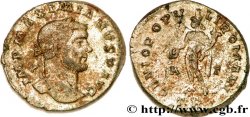
Аверс: легенда: MAXIMI-ANVS AVG.
Аверс: описание: Buste radié, casqué et cuirassé de Maximien Hercule à droite, avec pan de paludamentum, vu de trois quarts en avant (C01).
Аверс: перевод: “Maximianus Augustus”, (Maximien auguste).
Обратная сторона
Реверс: легенда: VIRT[V]TI AVGG/ -|-// -.
Реверс: Описание: Hercule nu debout à droite, étranglant le lion de Némée.
Реверс: перевод: “Virtuti Augustorum”, (À la Virilité des augustes).
Комментарий
Avec des traces d’argenture superficielle. Cuirasse cloutée. Casque décoré et festonné. Mêmes coins que l’exemplaire de l’Ashmolean Museum d’Oxford, Bastien n° 228b, pl. XVI et du British Museum, Bastien n° 228a, pl. XVI. Même coin de droit que l’exemplaire du trésor de Troussey n° 4.860, Bastien n° 228c, pl. XVIII du Supplément II. C’est l’exemplaire illustré dans le Supplément II, Bastien n° 228d, pl. XVIII, indiqué comme provenant de la collection privée DC. Tous ces exemplaires ont été gravés par le graveur 1. Notre exemplaire est de même coin de revers que les exemplaires provenant du trésor de Troussey n° 4842, Bastien n° 214(alpha), pl. XVIII et que l’exemplaire du Kunsthistorisches Museum de Vienne, collection Voetter n° 67.355, Bastien n° 226a, pl XVI (graveur 3) pour le droit. Ces quatre exemplaires présentent tous la même caractéristique avec l’absence de massue placée aux pieds d’Hercule. C’est le quatrième exemplaire publié et se trouve illustré dans le Supplément II de l’ouvrage de Pierre Bastien.
With traces of superficial silvering. Studded cuirass. Decorated and scalloped helmet. Same dies as the example in the Ashmolean Museum, Oxford, Bastien no. 228b, pl. XVI and in the British Museum, Bastien no. 228a, pl. XVI. Same obverse die as the example from the Troussey hoard no. 4,860, Bastien no. 228c, pl. XVIII of Supplement II. This is the example illustrated in Supplement II, Bastien no. 228d, pl. XVIII, indicated as coming from the private collection DC. All these examples were engraved by engraver 1. Our example has the same reverse die as the examples from the Troussey hoard no. 4842, Bastien no. 214(alpha), pl. XVIII and the example from the Kunsthistorisches Museum in Vienna, Voetter collection no. 67.355, Bastien no. 226a, pl XVI (engraver 3) for the obverse. These four examples all have the same characteristic with the absence of a club placed at the feet of Hercules. This is the fourth example published and is illustrated in Supplement II of Pierre Bastien's work
With traces of superficial silvering. Studded cuirass. Decorated and scalloped helmet. Same dies as the example in the Ashmolean Museum, Oxford, Bastien no. 228b, pl. XVI and in the British Museum, Bastien no. 228a, pl. XVI. Same obverse die as the example from the Troussey hoard no. 4,860, Bastien no. 228c, pl. XVIII of Supplement II. This is the example illustrated in Supplement II, Bastien no. 228d, pl. XVIII, indicated as coming from the private collection DC. All these examples were engraved by engraver 1. Our example has the same reverse die as the examples from the Troussey hoard no. 4842, Bastien no. 214(alpha), pl. XVIII and the example from the Kunsthistorisches Museum in Vienna, Voetter collection no. 67.355, Bastien no. 226a, pl XVI (engraver 3) for the obverse. These four examples all have the same characteristic with the absence of a club placed at the feet of Hercules. This is the fourth example published and is illustrated in Supplement II of Pierre Bastien's work
Историческая справка
MAXIMIANUS HERCULIUS
(10/12/285-02/310)
Auguste I
Maximian was born in Sirmium around 250. He has "a low forehead, a wrinkled face, a trumpet nose, a thick chin and neck, a shaggy beard" according to "The Roman Emperors", op. cit., p. 119. This description does not look so much like the portraits of the argentei, which are stereotyped and not necessarily recognizable. He is chosen by Diocletian to assist him. He was first Caesar, then Augustus from April 286, and it was the foundation of the Diarchy. Maximien settles in Trèves and must fight against the barbarian invasions and the usurpation of Carausius in Brittany. In 293, when the Tetrarchy was created, he was assisted by Constantius Chlorus. Diocletian forces Maximian to abdicate on May 1, 305. He resents retirement and goes to support his son Maxentius when he seizes Rome on October 28, 306. He resumes service as august in 307 and helps Constantine to whom he gives his daughter Fausta in marriage. Maximian is forced to abdicate at the conference of Carnuntum, November 11, 308. One last time, he resumes the purple at the beginning of 310 in Marseilles before committing suicide or being assassinated.
 Cообщить об ошибке
 Распечатать страницу
 Отправить мой выбор
 Задать вопрос
 Consign / sell
ПОХОЖИЕ ТОВАРЫ
 Информация



cgbfr.com для нумизматов


