


bpv_296889 - NERO Tétradrachme syro-phénicien

недоступный.
Товар уже продан в нашем интернет-магазине (2013)
Цена: : 450.00 €
Товар уже продан в нашем интернет-магазине (2013)
Цена: : 450.00 €
Тип Tétradrachme syro-phénicien
Дата: an 6/ 108
Монетный двор / Город: Antioche, Syrie, Séleucie et Piérie
Металл: silver
Диаметр: 25 mm
Ориентация осей монеты: 12 h.
Вес: 14,74 g.
Комментарии о состоянии
Flan court comme fréquemment à cette période
Ссылки в каталоге: :
Происхождение:
Cet exemplaire est le 0080_017 de la base TSP, il provient de la Collection Richard McAlee. C’est cet exemplaire qui illustre le type dans l’ouvrage de Richard McAlee The coins of Roman Antioch, page 137, n°256b
Лицевая сторона
Аверс: описание: Buste lauré de Néron barbu à droite avec l'égide sur le cou (O*4).
Аверс: легенда: NERWNOS KAISAROS - SEBASTOU, (Nerwnws Kaisaros Sebastou)
Аверс: перевод: (Néron césar auguste).
Обратная сторона
Реверс: Описание: Aigle debout à gauche sur un foudre ailé, les ailes déployées ; dans le champ à gauche, une palme verticale.
Реверс: легенда: s HR
Реверс: перевод: An 6 du règne - An 108 de l’ère césarienne.
Комментарий
Intéressant portrait de l’empereur jeune mais déjà joufflu. De tels portraits sont très rares en numismatique romaine, du fait de la refonte générale à la réforme monétaire de 64.
À noter que l’on peut dater le début des rondeurs de l’empereur de cette sixième année du règne. L’année précédente, l’empereur a un visage mince et c’est durant l’an 6 que l’on voit aussi bien des portraits minces que des portraits déjà bien portants avec une presque totalité de ceux-ci barbus.
C’est la première émission importante, effectivement destinée à la circulation, dont le revers est orné de l’aigle, qui remplace alors la Tyché. Celle-ci ne sera plus utilisée, hors sous Trajan, que pour des émissions ponctuelles, commémoratives et probablement de donativa.
Michel Prieur suggère que le choix de l’aigle ne se rapporte pas à Jupiter, dieu on ne peut moins local, mais à l’aspect de lien entre la Terre et le Ciel de l’oiseau, lui donnant l’aspect œcuménique nécessaire pour satisfaire les habitants d’une région qui regroupait des centaines de groupes ethniques et religieux.
On peut en déduire que ces émissions, peut-être pour la première fois, ne sont plus spécifiques à la ville d’Antioche mais s’adressent à tout l’ensemble de la Syrie, Palestine et Phénicie, ce qui pose une fois le plus le problème de leur financement : local, régional, impérial ?
Dans la base TSP maintenue par Michel Prieur, vingt-cinq exemplaires sont maintenant répertorié, dont trois en musées, Paris, British Museum et Yale.
Interesting portrait of the young but already chubby emperor. Such portraits are very rare in Roman numismatics, due to the general overhaul during the monetary reform of 64.
Note that the beginning of the emperor's plumpness can be dated to this sixth year of the reign.. The previous year, the emperor had a thin face and it is during the year 6 that we see both thin portraits and portraits already in good health, almost all of them bearded..
This is the first important issue, actually intended for circulation, whose reverse is decorated with the eagle, which then replaces the Tyche. This will no longer be used, except under Trajan, for one-off, commemorative and probably donativa issues..
Michel Prieur suggests that the choice of the eagle does not relate to Jupiter, a god who could not be less local, but to the aspect of the bird as a link between Earth and Heaven, giving it the ecumenical aspect necessary to satisfy the inhabitants of a region which brought together hundreds of ethnic and religious groups..
We can deduce that these issues, perhaps for the first time, are no longer specific to the city of Antioch but are addressed to the whole of Syria, Palestine and Phoenicia, which once again raises the problem of their financing: local, regional, imperial? In the TSP database maintained by Michel Prieur, twenty-five examples are now listed, including three in museums, Paris, British Museum and Yale
À noter que l’on peut dater le début des rondeurs de l’empereur de cette sixième année du règne. L’année précédente, l’empereur a un visage mince et c’est durant l’an 6 que l’on voit aussi bien des portraits minces que des portraits déjà bien portants avec une presque totalité de ceux-ci barbus.
C’est la première émission importante, effectivement destinée à la circulation, dont le revers est orné de l’aigle, qui remplace alors la Tyché. Celle-ci ne sera plus utilisée, hors sous Trajan, que pour des émissions ponctuelles, commémoratives et probablement de donativa.
Michel Prieur suggère que le choix de l’aigle ne se rapporte pas à Jupiter, dieu on ne peut moins local, mais à l’aspect de lien entre la Terre et le Ciel de l’oiseau, lui donnant l’aspect œcuménique nécessaire pour satisfaire les habitants d’une région qui regroupait des centaines de groupes ethniques et religieux.
On peut en déduire que ces émissions, peut-être pour la première fois, ne sont plus spécifiques à la ville d’Antioche mais s’adressent à tout l’ensemble de la Syrie, Palestine et Phénicie, ce qui pose une fois le plus le problème de leur financement : local, régional, impérial ?
Dans la base TSP maintenue par Michel Prieur, vingt-cinq exemplaires sont maintenant répertorié, dont trois en musées, Paris, British Museum et Yale.
Interesting portrait of the young but already chubby emperor. Such portraits are very rare in Roman numismatics, due to the general overhaul during the monetary reform of 64.
Note that the beginning of the emperor's plumpness can be dated to this sixth year of the reign.. The previous year, the emperor had a thin face and it is during the year 6 that we see both thin portraits and portraits already in good health, almost all of them bearded..
This is the first important issue, actually intended for circulation, whose reverse is decorated with the eagle, which then replaces the Tyche. This will no longer be used, except under Trajan, for one-off, commemorative and probably donativa issues..
Michel Prieur suggests that the choice of the eagle does not relate to Jupiter, a god who could not be less local, but to the aspect of the bird as a link between Earth and Heaven, giving it the ecumenical aspect necessary to satisfy the inhabitants of a region which brought together hundreds of ethnic and religious groups..
We can deduce that these issues, perhaps for the first time, are no longer specific to the city of Antioch but are addressed to the whole of Syria, Palestine and Phoenicia, which once again raises the problem of their financing: local, regional, imperial? In the TSP database maintained by Michel Prieur, twenty-five examples are now listed, including three in museums, Paris, British Museum and Yale
Историческая справка
NERO
(13/10/54-9/06/68)
Augustus
Nero is certainly one of the best-known emperors, thanks to Tacitus and Suetonius, but also one of the most decried. He is the last representative of the Julio-Claudian dynasty. Son of Agrippina, Claudius' second wife, and Cneius Domitius Ahenobarbus, he was born in 37. He descends from both Augustus through his mother and Julie through his maternal grandfather, Germanicus. After the assassination of Claude by Agrippina with the help of Locuste in 54, aged 17, he began his reign under good auspices. Aided by Seneca, his tutor, and Burrus, prefect of the Praetorium, he governed intelligently with the Senate. He married Octavie, daughter of Claudius and Messalina. Octavie's brother, Britannicus, dies under mysterious conditions in AD 55 (poisoned?). After the "quinquennum aureum" (54-59), the emperor had or allowed his mother to be murdered. The last nine years of the reign will destabilize the principate.
 Cообщить об ошибке
 Распечатать страницу
 Отправить мой выбор
 Задать вопрос
 Consign / sell
ПОХОЖИЕ ТОВАРЫ

 Информация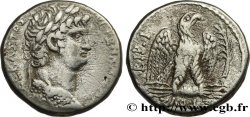

Your Recently Viewed Items
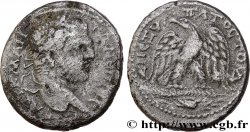
CARACALLA Tétradrachme syro-phénicien VF
280.00 €

2 centimes Cérès 1878 Paris F.109/3 XF40
7.50 €
cgbfr.com для нумизматов


