


fme_1117193 - SECOND EMPIRE Médaille, Porte d’entrée d’exposition universelle

15.00 €
Количество
Добавить в корзину

Тип Médaille, Porte d’entrée d’exposition universelle
Дата: 1867
Металл: brass
Диаметр: 32 mm
Ориентация осей монеты: 12 h.
Вес: 6,78 g.
Век: lisse
Пуансон: sans poinçon
Комментарии о состоянии
Patine hétérogène avec des traces d’usure, rayures et taches d’oxydation. Quelques concrétions
Лицевая сторона
Аверс: легенда: NAPOLEON III - EMPEREUR.
Аверс: описание: Profil de Napoléon III à gauche, lauré mais avec une couronne très particulière comportant des feuilles de chêne avec les feuilles de laurier.
Обратная сторона
Реверс: легенда: EXPOSITION UNIVERSELLE. A L’EXERGUE : 1867.
Реверс: Описание: Porte d’entrée avec drapeaux, pylones, deux guichets.
Комментарий
Médaille avec un diamètre sans bélière de 28 mm
Les expositions universelles ont été créées pour présenter les réalisations industrielles des différentes nations. Elles représentaient la vitrine technologique et industrielle des participants, témoignant du progrès au cours de la révolution industrielle. La première exposition universelle s'est déroulée à Londres en 1851.
À l'origine, chaque pays disposait d'un espace réservé dans un pavillon central. À partir de 1867, des pavillons nationaux firent leur apparition. En principe, ils étaient attribués seulement s'il y avait des choses à présenter que le pavillon central ne pouvait accueillir. Ils ne tardèrent pas à se généraliser, les nations exposantes construisant des pavillons typiques de l'architecture de leurs pays.
La compétition était omniprésente dans les expositions universelles, et des concours permettaient aux plus méritants d'obtenir des médailles bénéficiant d'un certain prestige.
De nombreuses réalisations architecturales construites à l'occasion d'expositions universelles sont devenues par la suite des symboles des villes qui les ont abritées : la tour Eiffel à Paris, l'Atomium à Bruxelles, le Space Needle à Seattle, la Biosphère à Montréal.
Enfin, la tenue des expositions universelles a toujours été l'occasion de mettre en place des projets d'urbanisme : construction du métro de Paris en 1900 ou celui de Montréal en 1967, extension du métro de Lisbonne en 1998…
Voir http://fr.wikipedia.org/wiki/Exposition_universelle .
Medal with a diameter without bail of 28 mm Universal exhibitions were created to present the industrial achievements of different nations. They represented the technological and industrial showcase of the participants, testifying to progress during the industrial revolution.. The first World's Fair took place in London in 1851..
Originally, each country had a dedicated space in a central pavilion. From 1867, national pavilions appeared. In principle, they were only allocated if there were things to be presented that the central pavilion could not accommodate.. They soon became widespread, with exhibiting nations building pavilions typical of the architecture of their countries..
Competition was omnipresent at world fairs, and competitions allowed the most deserving to obtain medals that carried a certain prestige..
Many architectural achievements built for world exhibitions have subsequently become symbols of the cities that hosted them: the Eiffel Tower in Paris, the Atomium in Brussels, the Space Needle in Seattle, the Biosphere in Montreal..
Finally, the holding of universal exhibitions has always been an opportunity to implement urban planning projects: construction of the Paris metro in 1900 or that of Montreal in 1967, extension of the Lisbon metro in 1998... See http://fr. Wikipedia. org/wiki/Exposition_universelle
Les expositions universelles ont été créées pour présenter les réalisations industrielles des différentes nations. Elles représentaient la vitrine technologique et industrielle des participants, témoignant du progrès au cours de la révolution industrielle. La première exposition universelle s'est déroulée à Londres en 1851.
À l'origine, chaque pays disposait d'un espace réservé dans un pavillon central. À partir de 1867, des pavillons nationaux firent leur apparition. En principe, ils étaient attribués seulement s'il y avait des choses à présenter que le pavillon central ne pouvait accueillir. Ils ne tardèrent pas à se généraliser, les nations exposantes construisant des pavillons typiques de l'architecture de leurs pays.
La compétition était omniprésente dans les expositions universelles, et des concours permettaient aux plus méritants d'obtenir des médailles bénéficiant d'un certain prestige.
De nombreuses réalisations architecturales construites à l'occasion d'expositions universelles sont devenues par la suite des symboles des villes qui les ont abritées : la tour Eiffel à Paris, l'Atomium à Bruxelles, le Space Needle à Seattle, la Biosphère à Montréal.
Enfin, la tenue des expositions universelles a toujours été l'occasion de mettre en place des projets d'urbanisme : construction du métro de Paris en 1900 ou celui de Montréal en 1967, extension du métro de Lisbonne en 1998…
Voir http://fr.wikipedia.org/wiki/Exposition_universelle .
Medal with a diameter without bail of 28 mm Universal exhibitions were created to present the industrial achievements of different nations. They represented the technological and industrial showcase of the participants, testifying to progress during the industrial revolution.. The first World's Fair took place in London in 1851..
Originally, each country had a dedicated space in a central pavilion. From 1867, national pavilions appeared. In principle, they were only allocated if there were things to be presented that the central pavilion could not accommodate.. They soon became widespread, with exhibiting nations building pavilions typical of the architecture of their countries..
Competition was omnipresent at world fairs, and competitions allowed the most deserving to obtain medals that carried a certain prestige..
Many architectural achievements built for world exhibitions have subsequently become symbols of the cities that hosted them: the Eiffel Tower in Paris, the Atomium in Brussels, the Space Needle in Seattle, the Biosphere in Montreal..
Finally, the holding of universal exhibitions has always been an opportunity to implement urban planning projects: construction of the Paris metro in 1900 or that of Montreal in 1967, extension of the Lisbon metro in 1998... See http://fr. Wikipedia. org/wiki/Exposition_universelle
Историческая справка
SECOND EMPIRE
(02/12/1852-04/09/1870)
Proclaimed Emperor under the name of Napoleon III, Louis Napoleon made his solemn entry into Paris on December 2, 1852.. He married Eugénie Marie de Montijo, a Spanish aristocrat, in January 1853. His reign can be divided into three periods: the authoritarian Empire until 1860; the Liberal Empire from 1860 to 1870 then the Parliamentary Empire in 1870. During the authoritarian Empire, Napoleon III exercised his power without sharing, controlled the press while the newspapers practiced self-censorship to avoid their suppression.. The prefects exercise unlimited power in the departments, the mayors, the civil servants are appointed by the government. As under the First Empire, Education and the University are monitored. Maintaining the main principles of the revolution, the sovereignty of the people is continued thanks to the consultation by plebiscite. On the economic level, the boom is important, industrialization develops as well as credit organizations and department stores. Military prestige is increased by the Crimean War which allows France to play an international role. The attack of Orsini (January 1858) does not prevent France from intervening in Italy to make triumph the principle of nationalities and allows the attachment of Nice and Savoy by the treaty of Turin (March 1860). From 1860, the Empire moved towards more freedoms: free trade treaty with England, appearance of a weak opposition in the Legislative Body, granting of the right to strike (1864), liberalization of the press (1868). On the international level, France acquires New Caledonia, Cochinchina and encourages the digging of the Suez Canal by Ferdinand de Lesseps. In Mexico, however, support for Maximilian and Austria was a failure. The 1869 elections were very bad for the regime and the opposition obtained 45% of the votes. The regime then evolved towards a parliamentary Empire by calling Émile Ollivier, leader of the Orléanist and liberal party, to power. After Sadowa in 1866 when Prussia crushed Austria, the affair of the throne of Spain and the dispatch from Ems led to the war which was declared on July 19, 1870. Accumulating setbacks, the French army was surrounded in Metz then Napoleon III, ill, capitulated at Sedan on September 2. As soon as the news was known, the decline of the Empire was announced by Gambetta, then the Republic was proclaimed on September 4.. Napoleon III was then taken captive to Hesse and then left for Kent where he died in 1873..
 Cообщить об ошибке
 Распечатать страницу
 Отправить мой выбор
 Задать вопрос
 Consign / sell
ПОХОЖИЕ ТОВАРЫ

 Информация


Your Recently Viewed Items

2 Cedis Spécimen GHANA 1972 P.14as UNC
60.00 €

SARMATIA - OLBIA Dauphin XF
46.00 €

MEROVINGIAN COINS - indeterminate MINT Triens fourré CA à la croix XF
550.00 €

CONSTANTIUS II Centenionalis ou nummus XF
30.00 €

GALERIO Follis ou nummus AU
169.22 €
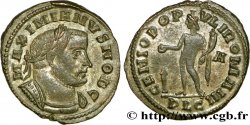
GALERIO Follis ou nummus AU
100.00 €
cgbfr.com для нумизматов


