


Live auction - fme_1105389 - TUNISIA Médaille, Ordre du Nichan al Iftikhar, Commandeur

Чтобы принять участие в торгах, вы должны войти в систему и стать подтвержденным участником аукциона. Войдите, чтобы сделать ставку. Ваш аккаунт будет подтвержден в течение 48 часов. Не ждите до закрытия торгов, чтобы зарегистрироваться.Сделав ставку на данный товар, вы вступаете в юридическое соглашение на покупку выбранного товара и нажатием кнопки «Сделать ставку» подтверждаете принятие вами условий интернет-аукционов cgb.fr.
Ставка может бить сделана только в полном эквиваленте евро. Торги закроются согласно времени, указанному в описании товара, все ставки, сделанные после закрытия торгов, учитываться не будут. Не следует откладывать предложение вашей ставки до последнего момента, так как система может не успеть обработать вашу заявку, и ваша ставка не будет принята. Более детальную информацию вы найдёте здесь: FAQ по интернет-аукционам.
Все ставки победителей подлежат комиссии 18%.
Все ставки победителей подлежат комиссии 18%.
| Оценить : | 200 € |
| Цена : | 185 € |
| Максимальная предлагаемая цена : | 370 € |
| Конец торгов : | 14 April 2026 17:59:53 |
| Участников : | 2 Участников |
Тип Médaille, Ordre du Nichan al Iftikhar, Commandeur
Дата: n.d.
Металл: silver
Диаметр: 123 mm
Ориентация осей монеты: 12 h.
Вес: 57,03 g.
Век: lisse
Комментарии о состоянии
Aspect légèrement irisé et oxydé
Лицевая сторона
Аверс: легенда: ANÉPIGRAPHE.
Аверс: описание: Caractères dans un médaillon central.
Обратная сторона
Реверс: легенда: LISSE.
Комментарий
Diamètre du médaillon : 29,5 mm de l’étoile : 57 mm, avec la bélière en forme de noeud : 93,5 mm. Poinçon d’orfèvre “A*B & C” visible sur l’anneau de suspension du ruban.
Ruban vert à 4 rayures rouges long d’environ 38 à 45 cm (sans compter les ficelles d’attache).
Le poids inclut celui du ruban.
Médaille conservée dans un écrin rouge à feutrine et soie écrue
Exemplaire émaillé de rouge et vert avec des rayons ciselés à facette entre chaque bras, le médaillon central porte des caractères arabes sur un fond d’émail vert. Il est tenu par un noeud en fleur et retenu par un ruban jaune et vert qui s’accroche grâce à une attache métallique.
Cette décoration avait été instituée en 1835 par Ahmad I ibn Mustafa, Bey de Tunis et réformé en 1857 par son successeur Muhammad II ibn al-Husayn.
Medallion diameter: 29.5 mm; star diameter: 57 mm; including the knot-shaped bail: 93.5 mm. Maker's mark “A*B & C” visible on the ribbon's suspension ring. Green ribbon with four red stripes, approximately 38 to 45 cm long (excluding the fastening cords). The weight includes the ribbon. The medal is housed in a red felt and ecru silk case. Enamelled in red and green with faceted, chiseled rays between each arm, the central medallion bears Arabic script on a green enamel background. It is held by a flower-shaped knot and secured by a yellow and green ribbon with a metal clasp. This decoration was instituted in 1835 by Ahmad I ibn Mustafa, Bey of Tunis, and reformed in 1857 by his successor, Muhammad II ibn al-Husayn.
Ruban vert à 4 rayures rouges long d’environ 38 à 45 cm (sans compter les ficelles d’attache).
Le poids inclut celui du ruban.
Médaille conservée dans un écrin rouge à feutrine et soie écrue
Exemplaire émaillé de rouge et vert avec des rayons ciselés à facette entre chaque bras, le médaillon central porte des caractères arabes sur un fond d’émail vert. Il est tenu par un noeud en fleur et retenu par un ruban jaune et vert qui s’accroche grâce à une attache métallique.
Cette décoration avait été instituée en 1835 par Ahmad I ibn Mustafa, Bey de Tunis et réformé en 1857 par son successeur Muhammad II ibn al-Husayn.
Medallion diameter: 29.5 mm; star diameter: 57 mm; including the knot-shaped bail: 93.5 mm. Maker's mark “A*B & C” visible on the ribbon's suspension ring. Green ribbon with four red stripes, approximately 38 to 45 cm long (excluding the fastening cords). The weight includes the ribbon. The medal is housed in a red felt and ecru silk case. Enamelled in red and green with faceted, chiseled rays between each arm, the central medallion bears Arabic script on a green enamel background. It is held by a flower-shaped knot and secured by a yellow and green ribbon with a metal clasp. This decoration was instituted in 1835 by Ahmad I ibn Mustafa, Bey of Tunis, and reformed in 1857 by his successor, Muhammad II ibn al-Husayn.
Историческая справка
TUNISIA
 Cообщить об ошибке
 Распечатать страницу
 Отправить мой выбор
 Задать вопрос
 Consign / sell
ПОХОЖИЕ ТОВАРЫ
 Информация



Your Recently Viewed Items
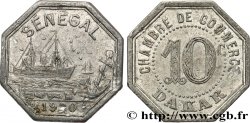
AFRIQUE FRANÇAISE - SÉNÉGAL 10 Centimes Chambre de Commerce de Dakar 1920 DAK
100.00 €
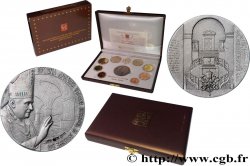
VATICAN COFFRET Euro BELLE ÉPREUVE - Pape Benoit XVI 2011 Proof set
120.00 €
Essai Monétaire de 5 francs Mac-Mahon en Bronze-Argenté 1874 GEM.130 14 MS
900.00 €
5 francs Charles X, 1er type 1825 Paris F.310/2 MS62 PCGS
500.00 €
ASSOCIATIONS PROFESSIONNELLES - SYNDICATS Plaque, Conscience et Fidelité, lot d
60.00 €

ALGERIA 1 Sultani Selim III AH 1221 (1806) Alger AU
620.00 €
cgbfr.com для нумизматов


