


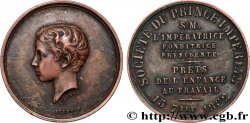
E-auction 306-225271 - fme_367414 - NAPOLÉON IV Médaille des 18 ans du prince impérial

Чтобы принять участие в торгах, вы должны войти в систему и стать подтвержденным участником аукциона. Войдите, чтобы сделать ставку. Ваш аккаунт будет подтвержден в течение 48 часов. Не ждите до закрытия торгов, чтобы зарегистрироваться.Сделав ставку на данный товар, вы вступаете в юридическое соглашение на покупку выбранного товара и нажатием кнопки «Сделать ставку» подтверждаете принятие вами условий интернет-аукционов cgb.fr.
Ставка может бить сделана только в полном эквиваленте евро. Торги закроются согласно времени, указанному в описании товара, все ставки, сделанные после закрытия торгов, учитываться не будут. Не следует откладывать предложение вашей ставки до последнего момента, так как система может не успеть обработать вашу заявку, и ваша ставка не будет принята. Более детальную информацию вы найдёте здесь: FAQ по интернет-аукционам.
БЕСПЛАТНО.
БЕСПЛАТНО.
| Оценить : | 100 € |
| Цена : | 23 € |
| Максимальная предлагаемая цена : | 24 € |
| Конец торгов : | 25 February 2019 18:23:30 |
| Участников : | 4 Участников |
Тип Médaille des 18 ans du prince impérial
Дата: 1874
Монетный двор / Город: UK
Металл: bronze
Диаметр: 45,5 mm
Ориентация осей монеты: 12 h.
Гравер MERLEY Louis (1815-1883)
Вес: 36 g.
Век: lisse
Комментарии о состоянии
Médaille très intéressante, avec une belle effigie au droti
Лицевая сторона
Аверс: легенда: NAPOLÉON NÉ À PARIS LE 16 MARS 1856.
Аверс: описание: Tête nue à gauche de Napoléon.
Обратная сторона
Реверс: легенда: 16 MARS 1874.
Комментарий
Napoléon Eugène Louis Jean Joseph Bonaparte, prince impérial, dit Louis-Napoléon, né le 16 mars 1856 à Paris et mort le 1er juin 1879 en pays zoulou (Afrique-du-Sud), est le fils unique de Napoléon III, empereur des Français, et de son épouse, l’impératrice Eugénie. Appelé Louis par ses parents, il signe Napoléon après la mort de son père, le 9 janvier 1873, au lieu de Louis-Napoléon précédemment. Il est parfois désigné sous le nom de “Napoléon IV”. En exil, il utilise parfois le titre de courtoisie de “comte de Pierrefonds”, déjà utilisé par son père à cause du château médiéval qu'il a fait restaurer par Viollet-Le-Duc.
Louis Merley (1815-1883), est un graveur et sculpteur français. Il n'a pas eu une production sculpturale très importante mais produira beaucoup de travail en glyptique. Il remporte le prix de 10 000 francs pour le concours en vue de l'émission de la nouvelle pièce française de 20 francs-or (Louis d'or ou Napoléon) émise par la Deuxième République . Cette pièce est frappée en 1849, 1850 et 1851, et un module de 10 francs-or (demi-Louis) en 1850 et 1851. Ces pièces, émises à des tirages assez faibles, restent plus rares que les autres Louis d'or de la deuxième moitié du XIXe siècle.
Le dessin reprend l'effigie de la déesse Cérès, couronnée d'épis, proche de celle gravée par Eugène-André Oudiné à la même époque, mais regard dirigé à droite. Ce graveur ne produira que ce type de monnaie..
Napoleon Eugène Louis Jean Joseph Bonaparte, Prince Imperial, known as Louis-Napoleon, born on March 16, 1856 in Paris and died on June 1, 1879 in Zulu country (South Africa), is the only son of Napoleon III, Emperor of the French, and his wife, Empress Eugenie. Called Louis by his parents, he signed Napoleon after the death of his father, on January 9, 1873, instead of Louis-Napoléon previously. He is sometimes referred to as “Napoleon IV”. In exile, he sometimes used the courtesy title of “Count of Pierrefonds”, already used by his father because of the medieval castle that he had restored by Viollet-Le-Duc.
Louis Merley (1815-1883), was a French engraver and sculptor. He did not have a very important sculptural production but produced a lot of glyptic work.. He won the 10,000 franc prize for the competition for the issue of the new French 20-franc gold coin (Louis d'or or Napoléon) issued by the Second Republic. . This coin was minted in 1849, 1850 and 1851, and a 10 gold franc module (half-Louis) in 1850 and 1851. These coins, issued in relatively small numbers, remain rarer than the other Louis d'or coins from the second half of the 19th century..
The drawing shows the effigy of the goddess Ceres, crowned with ears of corn, similar to that engraved by Eugène-André Oudiné at the same time, but with her gaze directed to the right.. This engraver will only produce this type of coin.
Louis Merley (1815-1883), est un graveur et sculpteur français. Il n'a pas eu une production sculpturale très importante mais produira beaucoup de travail en glyptique. Il remporte le prix de 10 000 francs pour le concours en vue de l'émission de la nouvelle pièce française de 20 francs-or (Louis d'or ou Napoléon) émise par la Deuxième République . Cette pièce est frappée en 1849, 1850 et 1851, et un module de 10 francs-or (demi-Louis) en 1850 et 1851. Ces pièces, émises à des tirages assez faibles, restent plus rares que les autres Louis d'or de la deuxième moitié du XIXe siècle.
Le dessin reprend l'effigie de la déesse Cérès, couronnée d'épis, proche de celle gravée par Eugène-André Oudiné à la même époque, mais regard dirigé à droite. Ce graveur ne produira que ce type de monnaie..
Napoleon Eugène Louis Jean Joseph Bonaparte, Prince Imperial, known as Louis-Napoleon, born on March 16, 1856 in Paris and died on June 1, 1879 in Zulu country (South Africa), is the only son of Napoleon III, Emperor of the French, and his wife, Empress Eugenie. Called Louis by his parents, he signed Napoleon after the death of his father, on January 9, 1873, instead of Louis-Napoléon previously. He is sometimes referred to as “Napoleon IV”. In exile, he sometimes used the courtesy title of “Count of Pierrefonds”, already used by his father because of the medieval castle that he had restored by Viollet-Le-Duc.
Louis Merley (1815-1883), was a French engraver and sculptor. He did not have a very important sculptural production but produced a lot of glyptic work.. He won the 10,000 franc prize for the competition for the issue of the new French 20-franc gold coin (Louis d'or or Napoléon) issued by the Second Republic. . This coin was minted in 1849, 1850 and 1851, and a 10 gold franc module (half-Louis) in 1850 and 1851. These coins, issued in relatively small numbers, remain rarer than the other Louis d'or coins from the second half of the 19th century..
The drawing shows the effigy of the goddess Ceres, crowned with ears of corn, similar to that engraved by Eugène-André Oudiné at the same time, but with her gaze directed to the right.. This engraver will only produce this type of coin.
Историческая справка
NAPOLEON IV
(1856-1879)
Napoleon, the son of Emperor Napoleon III and Eugénie de Montijo, was born on March 16, 1856. In 1870, he followed his mother into exile in England. When his father died in 1873, he became the head of the imperial family. He followed an English military training and participated in the Zululand campaign where he died on June 1, 1879.
 Cообщить об ошибке
 Распечатать страницу
 Отправить мой выбор
 Задать вопрос
 Consign / sell
ПОХОЖИЕ ТОВАРЫ

 Информация


Your Recently Viewed Items
25 Francs FRANCE 1798 Laf.213 XF
250.00 €
100 Francs Spécimen NEW HEBRIDES 1941 P.10s UNC-
1360.00 €
10 Afghanis Spécimen AFGHANISTAN 1979 P.055as UNC
30.00 €
COUNTY OF TOULOUSE - GUILLAUME IV Denier ou raimondin AU
300.00 €
FRANCE COFFRET Euro BELLE ÉPREUVE 2014 Proof set
70.00 €

SWITZERLAND - REPUBLIC OF GENEVA 6 Deniers 1817 XF
30.00 €
cgbfr.com для нумизматов


