


Назад 1/1
E-auction 253-177152 - fme_367386 - SERBIA Médaille militaire de la guerre des Balkans
Чтобы принять участие в торгах, вы должны войти в систему и стать подтвержденным участником аукциона. Войдите, чтобы сделать ставку. Ваш аккаунт будет подтвержден в течение 48 часов. Не ждите до закрытия торгов, чтобы зарегистрироваться.Сделав ставку на данный товар, вы вступаете в юридическое соглашение на покупку выбранного товара и нажатием кнопки «Сделать ставку» подтверждаете принятие вами условий интернет-аукционов cgb.fr.
Ставка может бить сделана только в полном эквиваленте евро. Торги закроются согласно времени, указанному в описании товара, все ставки, сделанные после закрытия торгов, учитываться не будут. Не следует откладывать предложение вашей ставки до последнего момента, так как система может не успеть обработать вашу заявку, и ваша ставка не будет принята. Более детальную информацию вы найдёте здесь: FAQ по интернет-аукционам.
БЕСПЛАТНО.
БЕСПЛАТНО.
| Оценить : | 50 € |
| Цена : | 12 € |
| Максимальная предлагаемая цена : | 26 € |
| Конец торгов : | 19 February 2018 19:03:30 |
| Участников : | 6 Участников |
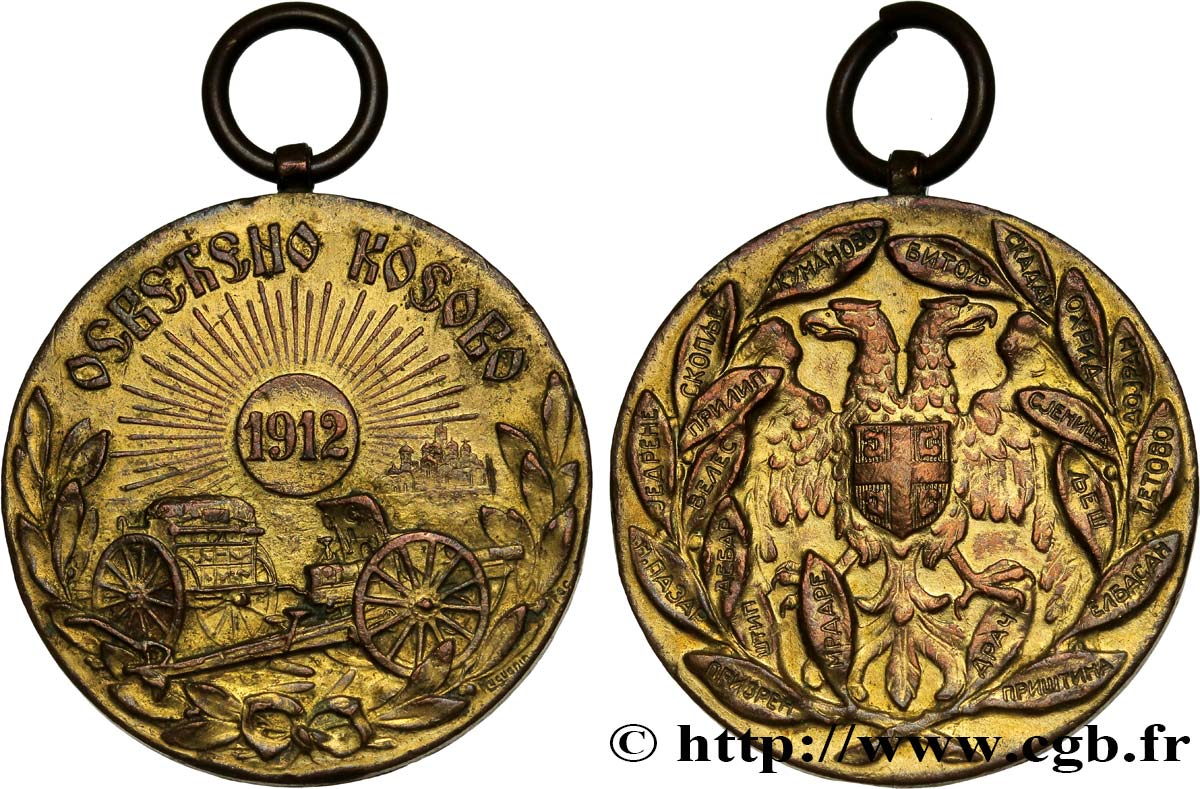
Тип Médaille militaire de la guerre des Balkans
Дата: 1912
Монетный двор / Город: Kosovo
Металл: gilt copper
Диаметр: 35,5 mm
Ориентация осей монеты: 12 h.
Гравер HUGUENIN
Вес: 21 g.
Век: lisse
Комментарии о состоянии
Belle et intéressante médaille, avec sa bélière d’origine. Patine dorée avec de très légers manques sur les points les plus en reliefs
Лицевая сторона
Аверс: описание: Pièces d’artillerie dans une couronne de lauriers ; une ville au second plan et un soleil rayonnant avec 1912 inscrit dedans.
Обратная сторона
Реверс: Описание: Aigle bicéphale avec un écu sur le corps, au centre d’une couronne de laurier dont chaque feuille porte un nom de ville (?).
Комментарий
Les guerres balkaniques ou guerres des Balkans sont des conflits qui ont divisé les Balkans dans les années 1912 et 1913. Les peuples chrétiens de l'Empire ottoman, qui s'étaient émancipés de la domination turque, aspiraient à agrandir leurs États en regroupant les populations de même langue vivant encore dans la « Turquie d'Europe ». Mais l'imbrication de ces populations dans certaines zones et le jeu des grandes puissances visant à diviser pour régner compliquent le processus.
À l’hiver 1878, le congrès de Berlin accorde officiellement l’indépendance à la Serbie ou, plus exactement lui accorde les terres au nord du Kosovo. Quant au Kosovo, il reste dans l'Empire ottoman. Ayant étendu les frontières du nouvel État serbe aux régions de Niš, Pirot, Toplica et Vranje, plusieurs milliers d'Albanais, les Muhaxheri (réfugiés) habitant la région de Toplica près de Niš, sont chassés vers le Kosovo resté sous domination ottomane. En 1912, les États balkaniques nouvellement affranchis de l’occupation ottomane décident d’unir leurs forces afin de libérer les terres restant sous contrôle ottoman. Soutenus par la Russie, ils repoussent les Ottomans aux portes de Constantinople. Tragiquement, une nouvelle guerre a lieu en 1913 et oppose cette fois les anciens alliés : la Deuxième Guerre balkanique. À l’origine d’un désaccord sur le partage des précédentes conquêtes, cette guerre se solde par la victoire de la Serbie. Réunie à Londres, le 17 décembre 1912, la conférence des ambassadeurs refuse à la Serbie, sous pression de l’Autriche-Hongrie, l’accès à la mer qu’elle convoitait par la vallée du Drin (Drim en serbe) mais, sous pression française et russe, lui octroie le Kosovo et la Macédoine..
The Balkan Wars or Balkan Wars were conflicts that divided the Balkans in the years 1912 and 1913.. The Christian peoples of the Ottoman Empire, who had emancipated themselves from Turkish domination, aspired to enlarge their states by grouping together the populations of the same language still living in \\\"European Turkey\\\".. But the interweaving of these populations in certain areas and the game of the great powers aiming to divide and rule complicate the process..
In the winter of 1878, the Congress of Berlin officially granted independence to Serbia, or more precisely, granted it the lands north of Kosovo.. As for Kosovo, it remains within the Ottoman Empire.. Having extended the borders of the new Serbian state to the regions of Niš, Pirot, Toplica and Vranje, several thousand Albanians, the Muhaxheri (refugees) living in the Toplica region near Niš, were driven to Kosovo, which remained under Ottoman rule.. In 1912, the Balkan states newly freed from Ottoman occupation decided to join forces to liberate the lands remaining under Ottoman control.. Supported by Russia, they pushed the Ottomans back to the gates of Constantinople. Tragically, a new war took place in 1913, this time between the former allies: the Second Balkan War.. The war, which began as a result of disagreement over the division of previous conquests, ended with Serbia winning the war.. Meeting in London on 17 December 1912, the Conference of Ambassadors refused Serbia, under pressure from Austria-Hungary, access to the sea it coveted via the Drin Valley (Drim in Serbian) but, under French and Russian pressure, granted it Kosovo and Macedonia..
À l’hiver 1878, le congrès de Berlin accorde officiellement l’indépendance à la Serbie ou, plus exactement lui accorde les terres au nord du Kosovo. Quant au Kosovo, il reste dans l'Empire ottoman. Ayant étendu les frontières du nouvel État serbe aux régions de Niš, Pirot, Toplica et Vranje, plusieurs milliers d'Albanais, les Muhaxheri (réfugiés) habitant la région de Toplica près de Niš, sont chassés vers le Kosovo resté sous domination ottomane. En 1912, les États balkaniques nouvellement affranchis de l’occupation ottomane décident d’unir leurs forces afin de libérer les terres restant sous contrôle ottoman. Soutenus par la Russie, ils repoussent les Ottomans aux portes de Constantinople. Tragiquement, une nouvelle guerre a lieu en 1913 et oppose cette fois les anciens alliés : la Deuxième Guerre balkanique. À l’origine d’un désaccord sur le partage des précédentes conquêtes, cette guerre se solde par la victoire de la Serbie. Réunie à Londres, le 17 décembre 1912, la conférence des ambassadeurs refuse à la Serbie, sous pression de l’Autriche-Hongrie, l’accès à la mer qu’elle convoitait par la vallée du Drin (Drim en serbe) mais, sous pression française et russe, lui octroie le Kosovo et la Macédoine..
The Balkan Wars or Balkan Wars were conflicts that divided the Balkans in the years 1912 and 1913.. The Christian peoples of the Ottoman Empire, who had emancipated themselves from Turkish domination, aspired to enlarge their states by grouping together the populations of the same language still living in \\\"European Turkey\\\".. But the interweaving of these populations in certain areas and the game of the great powers aiming to divide and rule complicate the process..
In the winter of 1878, the Congress of Berlin officially granted independence to Serbia, or more precisely, granted it the lands north of Kosovo.. As for Kosovo, it remains within the Ottoman Empire.. Having extended the borders of the new Serbian state to the regions of Niš, Pirot, Toplica and Vranje, several thousand Albanians, the Muhaxheri (refugees) living in the Toplica region near Niš, were driven to Kosovo, which remained under Ottoman rule.. In 1912, the Balkan states newly freed from Ottoman occupation decided to join forces to liberate the lands remaining under Ottoman control.. Supported by Russia, they pushed the Ottomans back to the gates of Constantinople. Tragically, a new war took place in 1913, this time between the former allies: the Second Balkan War.. The war, which began as a result of disagreement over the division of previous conquests, ended with Serbia winning the war.. Meeting in London on 17 December 1912, the Conference of Ambassadors refused Serbia, under pressure from Austria-Hungary, access to the sea it coveted via the Drin Valley (Drim in Serbian) but, under French and Russian pressure, granted it Kosovo and Macedonia..
Историческая справка
SERBIA
 Cообщить об ошибке
 Распечатать страницу
 Отправить мой выбор
 Задать вопрос
 Consign / sell
ПОХОЖИЕ ТОВАРЫ

 Информация

Your Recently Viewed Items

100 Yüan CHINA Shanghai 1914 P.0120c AU
115.00 €

AUGUSTE et AGRIPPA Dupondius COL NEM (as) XF/VF
200.00 €

REUNION 100 Francs 1964 Paris VF
5.00 €

100 francs Panthéon 1983 F.451/3 MS68
30.00 €
GERMANY - BRUNSWICK Gulden 1699 Brunswick VF
94.00 €
DJIBOUTI 2 Francs 1999 Paris MS
2.00 €
cgbfr.com для нумизматов


